Referrals
For placement questions and referral coordination.
Referrals: referrals@alliedlahousing.org
Los Angeles County
Allied LA Housing provides coordinated housing and daily support for adults across Los Angeles County — with a clear referral path for hospitals, case managers, and community partners.
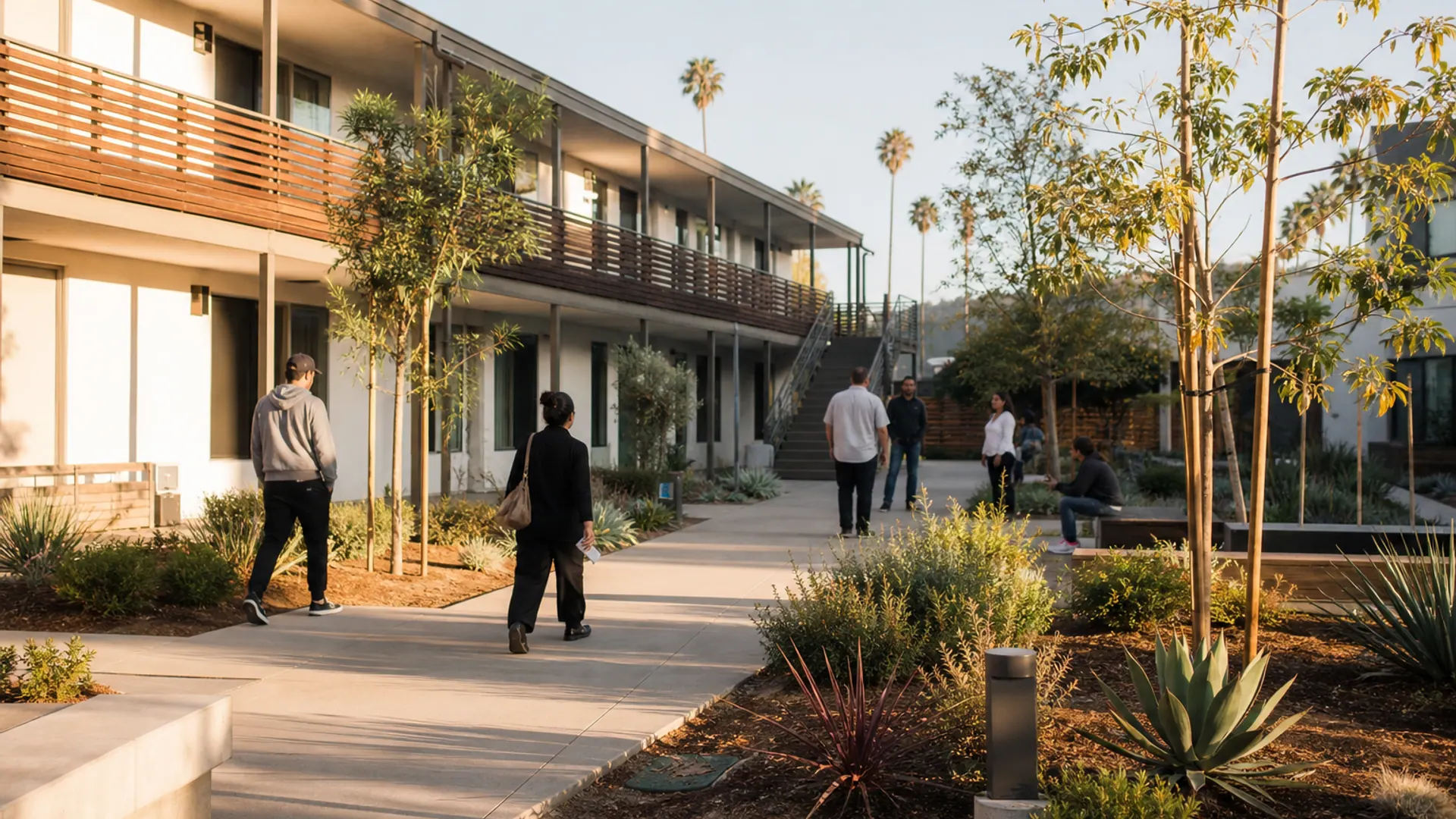
Mission
Housing instability makes recovery, medical follow-up, and long-term planning harder. Allied LA Housing offers a structured setting where adults can focus on immediate needs while receiving practical support — consistent routines, coordinated assistance, meals, transportation coordination, and thoughtful transition planning.
“Every person deserves to recover and plan their future in an environment built around dignity.”
Programs
Each offering supports a different point in recovery and housing stability. Placement depends on referral review, documentation, and current capacity.
Safe short-term housing and daily support for adults who are medically stable but do not have an appropriate place to continue recovering.
Structured temporary housing for adults who need stability while working toward an appropriate longer-term placement.
Daily meals, transportation coordination, routines, resource navigation, and practical assistance that help participants focus on recovery and stability.
Individualized planning and connections to housing, healthcare, benefits, and community resources that support the next step after the program.
Ready to discuss fit for a participant? Start with the referral process — submission does not guarantee placement.
Go to referralsTrust and Accountability
Clear communication, realistic expectations, and consistent follow-through with healthcare teams, case managers, and community organizations.
Referral information is reviewed before placement so program fit and immediate needs can be assessed.
Referral partners receive clear points of contact and practical updates when appropriate.
Every participant is treated as an adult with individual needs, preferences, and goals.
Planning begins early so the next step is considered throughout the participant’s stay.
Our Approach
Every participant arrives with different circumstances. The program structure remains consistent, while support is shaped around immediate needs and realistic next steps.
01
The team reviews available information, immediate needs, and program suitability.
02
Approved referrals receive clear arrival instructions and practical coordination.
03
Staff identify priorities related to recovery, daily stability, benefits, appointments, and housing.
04
Participants receive a consistent environment, meals, practical support, and coordinated assistance.
05
The team works with the participant and referral partners to prepare for an appropriate next placement or service connection.
Living Environment
Meals, routines, appointment coordination, and transition preparation — offered with consistency and respect.

Support may include
Eligibility
Programs may be appropriate for adults experiencing homelessness or housing instability who need a structured environment, coordinated support, or a safe place to continue recovering after a hospital, skilled nursing, or behavioral health stay.
Final eligibility and placement decisions are determined through referral review, available documentation, program capacity, and individual assessment. Allied LA Housing does not provide emergency medical care and does not guarantee acceptance.
Referrals
Share available details about the participant and program need. The team will review fit and follow up as appropriate. Submission does not guarantee placement.

Community Support
Supportive housing works best when healthcare providers, case managers, public programs, and community organizations communicate clearly. Allied LA Housing welcomes conversations about referral coordination, partnerships, volunteer opportunities, and resource support.
Contact our teamFAQ
Answers to questions we hear most often from case managers, discharge planners, and community partners.
Referrals may come from healthcare organizations, case managers, public programs, community organizations, or other approved partners, using the referral form or by contacting the team directly.
Programs are intended for adults experiencing homelessness, housing instability, or an unsafe recovery environment. Specific eligibility requirements are reviewed individually.
No. Allied LA Housing is presented as a structured supportive housing and stabilization program. It is not an emergency shelter or emergency medical provider.
The team may request contact information, current circumstances, relevant discharge or referral documents, funding information, and details needed to determine program fit.
Review time depends on documentation, program capacity, and the ability to confirm eligibility. Specific timing is discussed during the referral and intake process.
Transportation coordination may be available for approved appointments and program-related needs. Availability is discussed during the referral and intake process.
Length of stay depends on program type, individual needs, authorization, progress, and available transition options, and is discussed during the referral and intake process.
Transition planning may include referrals to housing, healthcare, benefits, case management, or other community resources appropriate to the participant’s situation.
Contact
For program information, families, and community questions. Please include your organization, the nature of the inquiry, and the best way to reach you.
For placement questions and referral coordination.
Referrals: referrals@alliedlahousing.org
For healthcare partnerships, funding, donations, and community collaboration.
Questions or concerns: contact@alliedlahousing.org
Take the Next Step
Structured housing, practical support, and thoughtful coordination — so participants have a stronger foundation for recovery and stability.